
The Orleans Parish Split Clerk Structure
Orleans Parish does not have one clerk for everything. It has two. The Clerk of Civil District Court, led by Clerk of Court and Ex-Officio Recorder Chelsey Richard Napoleon, handles civil filings, land records, and archives. A separate Criminal District Court Clerk handles felony case records. The two offices sit in different buildings and do not share files.
This split is unusual and important. A civil lawsuit, a divorce, or a property record goes to the civil clerk at 421 Loyola Avenue. A felony case record goes to the criminal clerk at 2700 Tulane Avenue. Sending a request to the wrong clerk is the most common delay, so confirm whether the matter is civil or criminal before you start.
Civil Clerk Duties
The civil clerk's Civil Division receives a wide range of filings: personal injury, contract disputes, foreclosures, successions, and domestic matters like divorce and support. The office describes its mission as prompt, professional service to the court and the public. Its Civil Division overview lays out what the division handles, shown below.
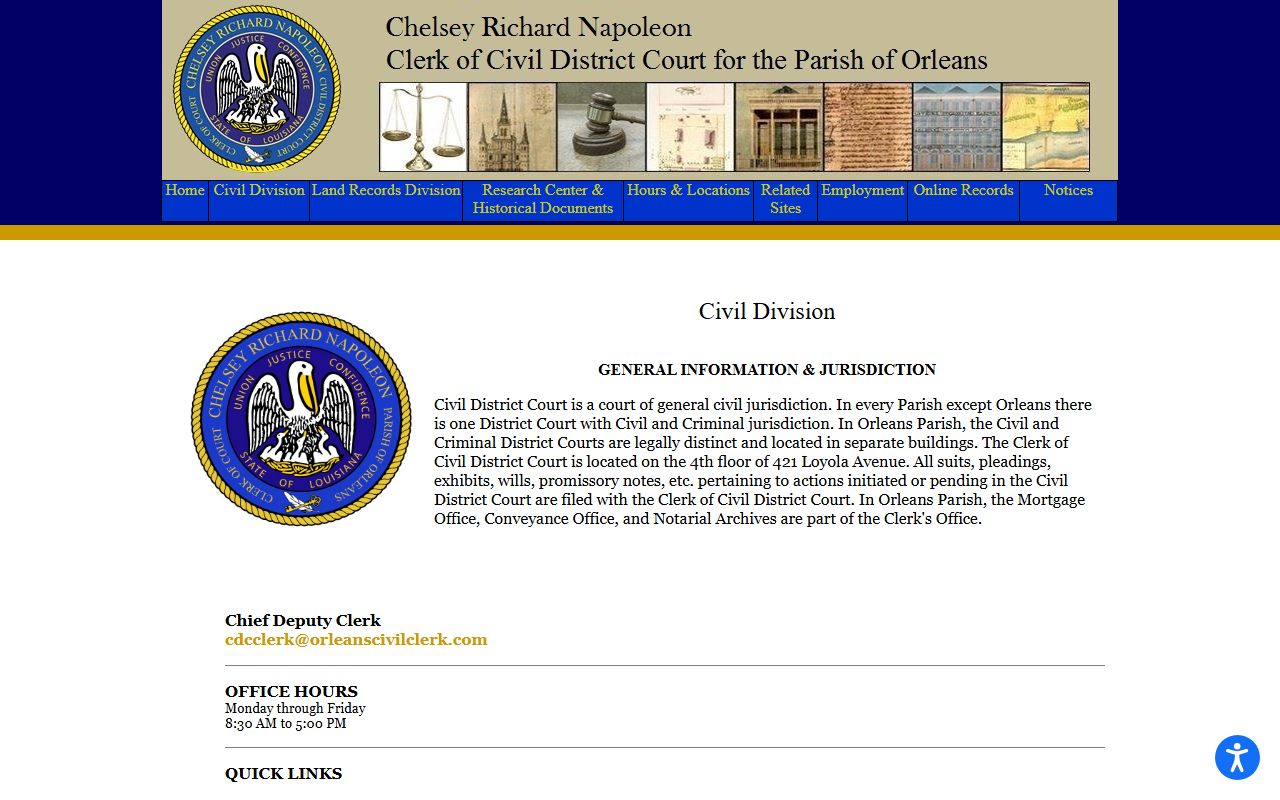
That overview is a good first stop for understanding which filings belong with the civil clerk.
Civil Clerk Departments and Forms
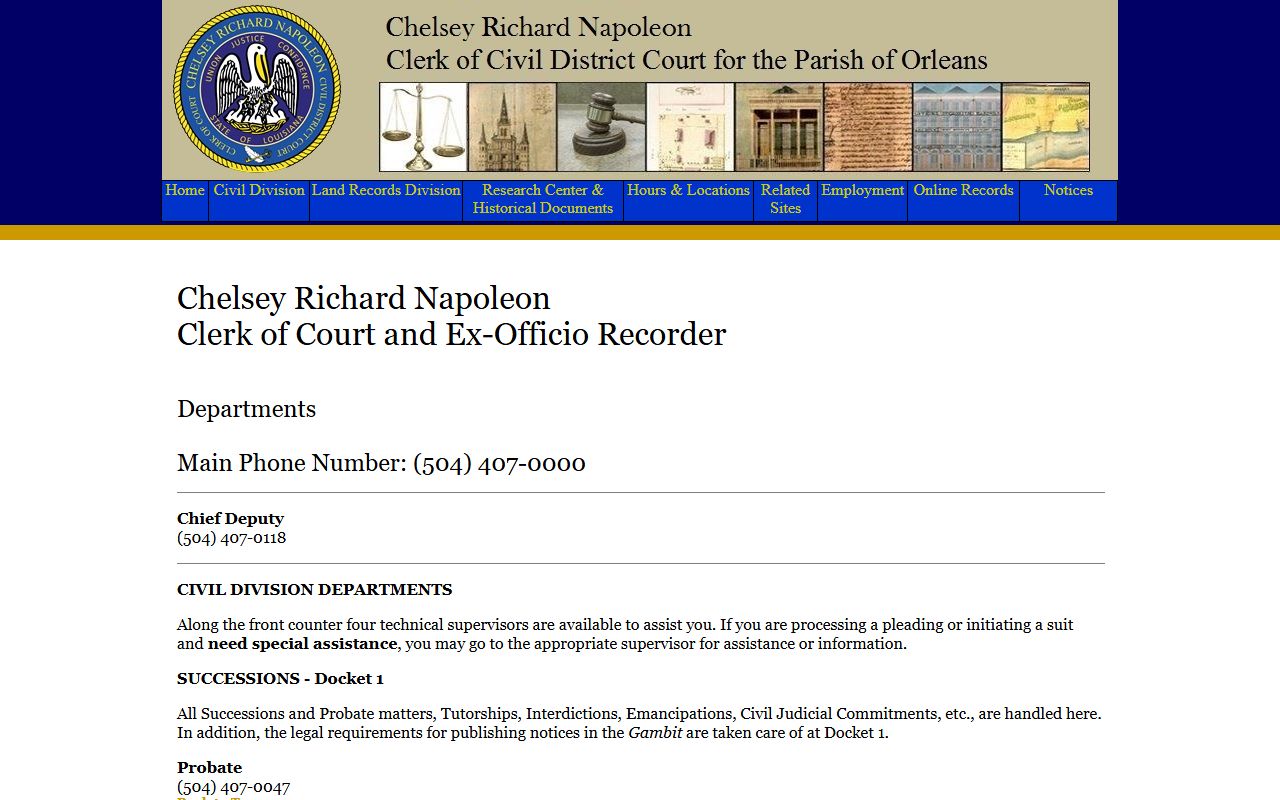
The civil clerk is organized into departments that handle different parts of a case, from intake to copies. The clerk's departments page lists those contact points, shown here.
For self-represented filers and attorneys alike, the clerk publishes forms to standardize common filings. The civil forms page is shown below.
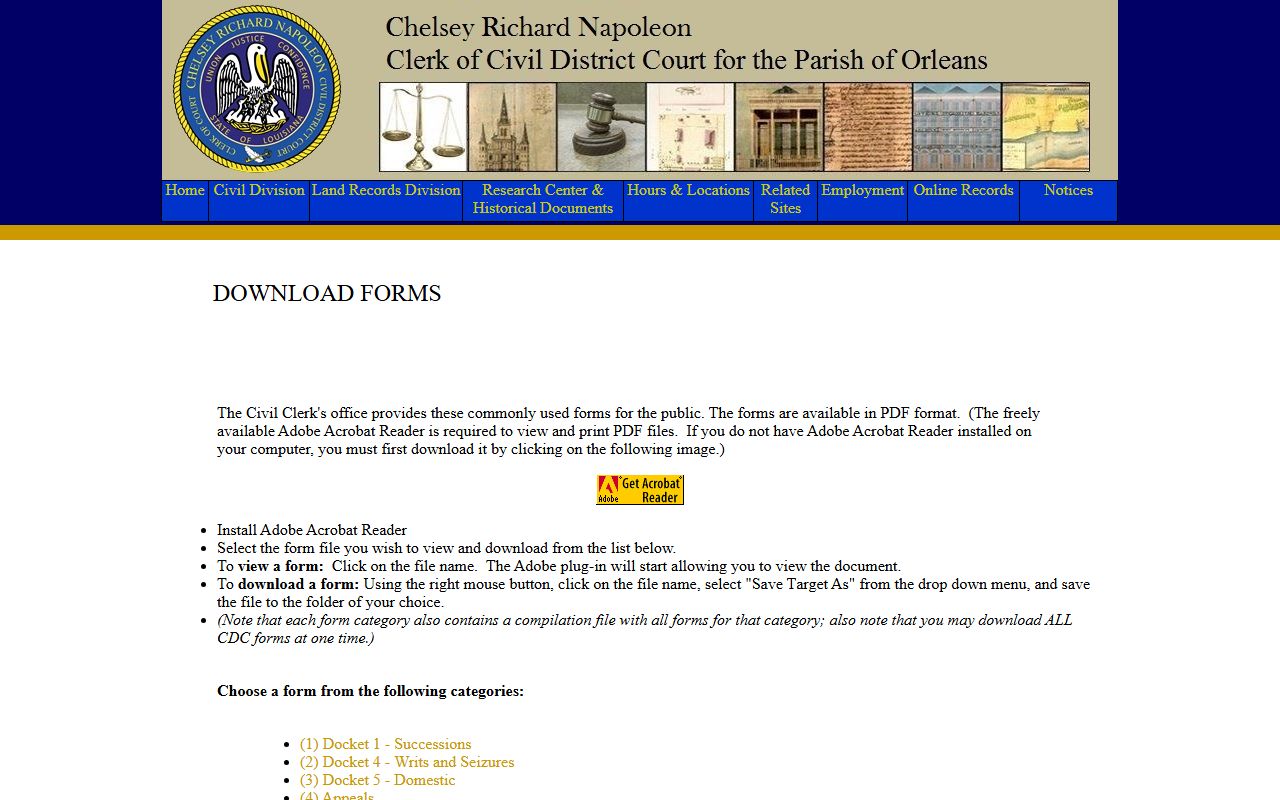
Using the clerk's own forms reduces the chance a filing is rejected for a formatting problem.
The Land Records Division
The civil clerk is also the ex-officio recorder, which means the Land Records Division records property documents: conveyances, donations, mortgages, liens, and other instruments. This is where a deed or a mortgage is recorded and later searched. The division publishes its own fee and forms pages. The Land Records fee page is shown below.
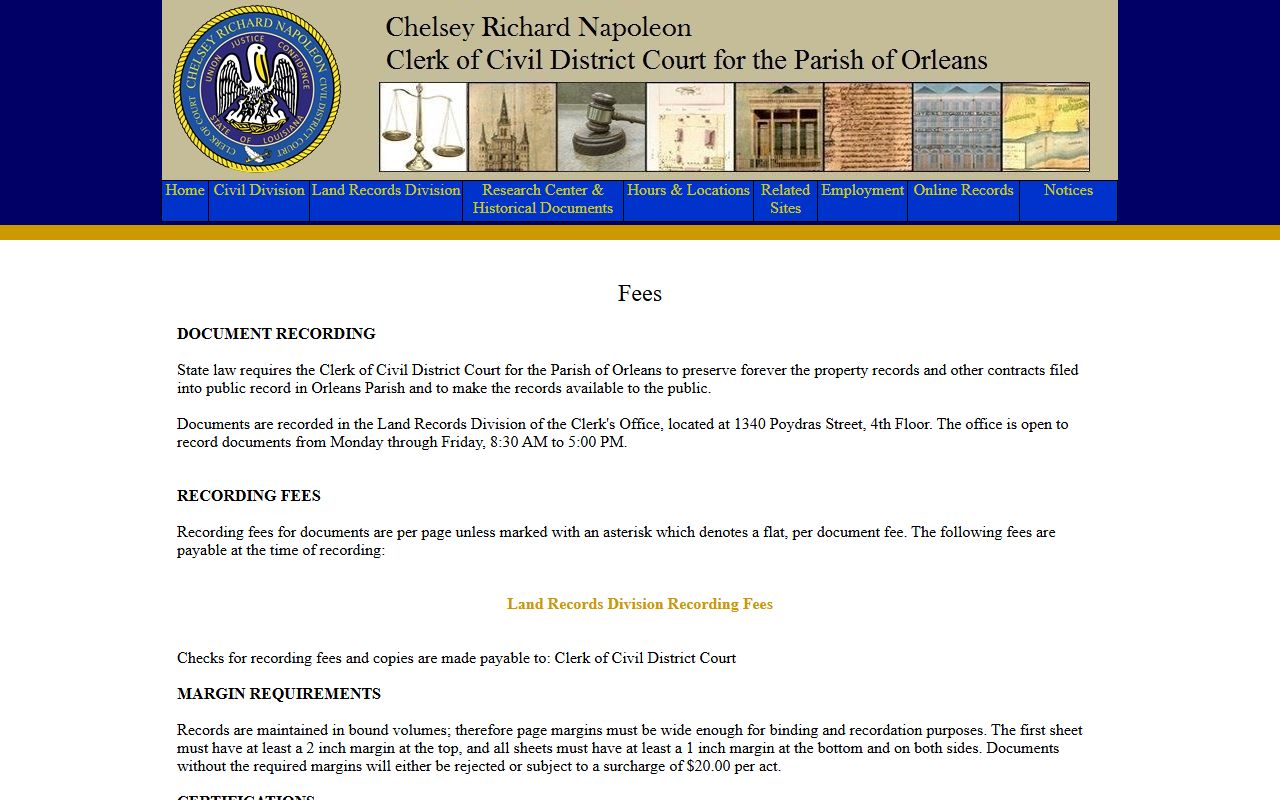
Recording and copy charges differ from civil case fees, so the land schedule is the right reference for property work. The Land Records forms page is shown here.
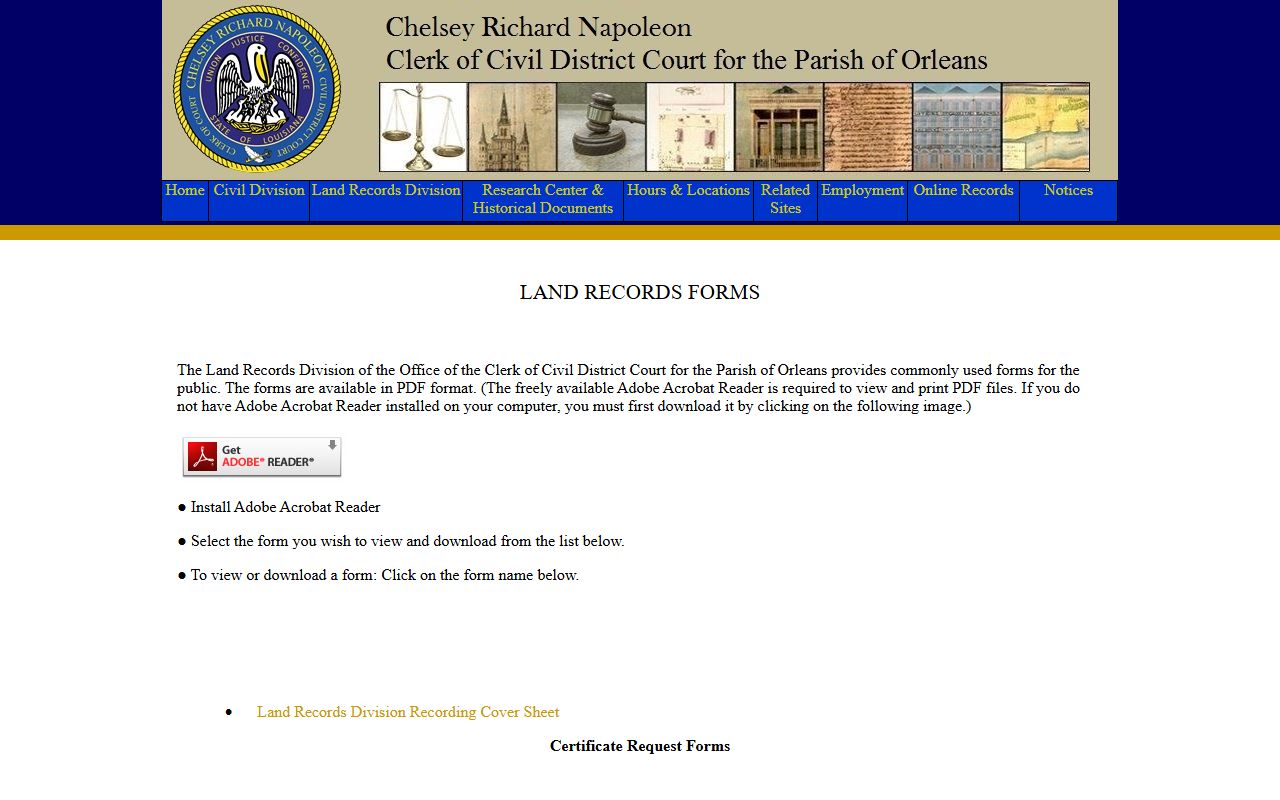
These forms cover recording, copies, and certifications for property instruments.
The Notarial Archives
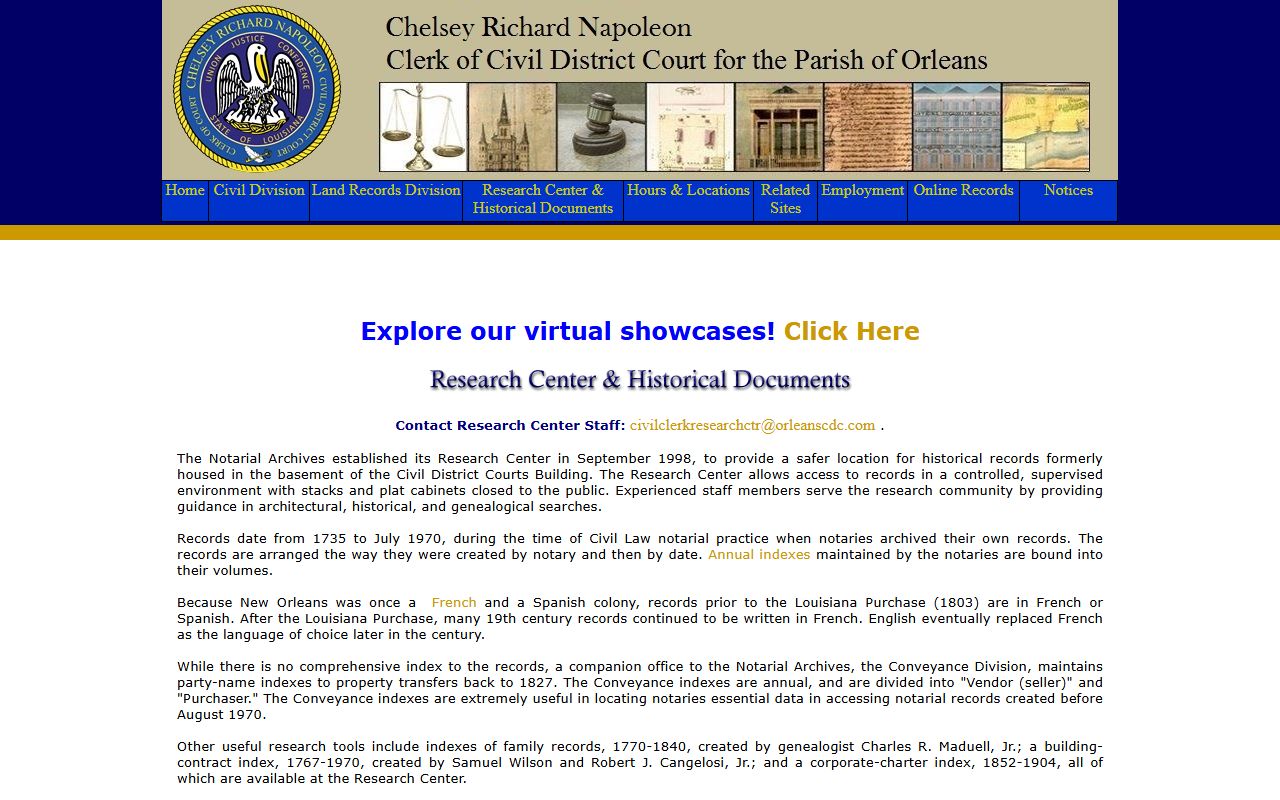
One of the civil clerk's most distinctive holdings is the Notarial Archives, attached to the land-records function. These records date back to the 1700s and are used for property, genealogy, architecture, and land-use research. Records after July 29, 1970 are retrieved by NA number, while older records often need the notary's name and the date of the act. The clerk's Research Center page is shown below.
The clerk's historical background page, shown here, explains how far the records reach.
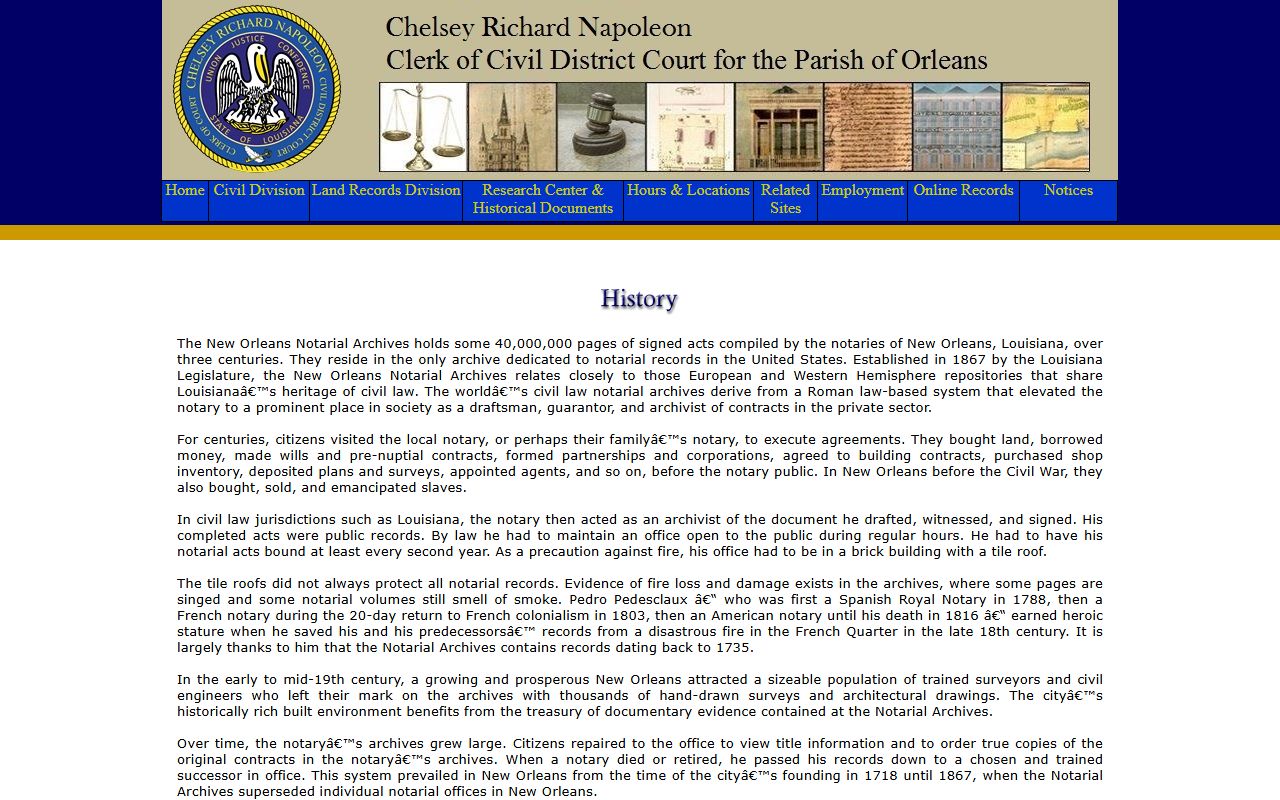
Few parishes can offer public records that go back nearly three centuries.
How to Request a Certified Copy
A certified copy carries the clerk's seal and is the version courts and agencies accept. The civil clerk asks that public-record requests go to its official email, with enough detail to find the file.
- Identify the record: civil case, land instrument, or notarial act.
- Gather the case or instrument number, party names, and filing or recording date.
- Email the request to cdcclerk@orleanscivilclerk.com, or contact the relevant division.
- State that you need a certified copy and the delivery method you prefer.
- Pay the certification and copy fee the clerk quotes.
- Keep the certified copy for any legal or title use.
Records Request Fields
The civil clerk uses an email request rather than a strict form, so a clear message with the right details works best. These are the elements the clerk needs.
| Request Element | Type | Required | Notes |
|---|---|---|---|
| Requester name | Email body | Implied | Identify yourself. |
| Contact information | Email body | Implied | Email, phone, or mailing address. |
| Record description | Email body | Yes | Case or instrument number, names, dates. |
| Copy type | Email body | Optional | Plain, certified, or emailed copy. |
| Delivery method | Email body | Optional | Mail, pickup, or electronic. |
Fees and Online Records
The civil clerk maintains online systems for civil and land records and publishes separate fee schedules for each. Inspection is generally free, while copies, certifications, and recordings carry charges. Confirm the amount against the current schedule before paying.
| Item | Source |
|---|---|
| Civil filing fees | Civil District Court filing fee schedule |
| Land recording and copies | Land Records fee page |
| Online records access | Civil and land remote access |
| Documentary tax | Applies to certain land transactions |
Some online functions are free to search, while full document images may require an account or payment.
Office Locations
The civil clerk operates from more than one location. The main courthouse office is at 421 Loyola Avenue, while land records and the archives use the Poydras Street building. Confirm the right location before a visit, especially for land or historical research.
Clerk of Civil District Court
421 Loyola Avenue
New Orleans, LA 70112
cdcclerk@orleanscivilclerk.com
Land Records & Archives
1340 Poydras Street, Suites 360 and 500
New Orleans, LA
Notarial Archives and Research Center
The Criminal District Court Clerk
For felony and criminal case records, the civil clerk is not the right office. Those records belong to the separate Criminal District Court Clerk at 2700 Tulane Avenue. Criminal certified copies, minute entries, and docket information come from that clerk, not this one. The split is the single most important thing to get right when requesting Orleans Parish records.
Note: Civil and land copies come from the civil clerk; felony case copies come from the Criminal District Court Clerk.
Searching Civil and Land Records Online
The civil clerk has moved much of its public access online. The remote access system lets users search civil cases and land records by name, number, or date, and the clerk's online records page routes visitors to it. Some searches are free, while viewing full document images or using advanced features may require an account or a payment.
The office has also announced an electronic workflow and free continuing-education seminars on its online tools, a sign that the systems are actively maintained. Because the public systems are updated and occasionally taken down for short maintenance windows, a search that fails at one moment may simply need to be retried later. For day-to-day record searches, the online tools handle most needs without a trip downtown.