
Louisiana Public Records Law
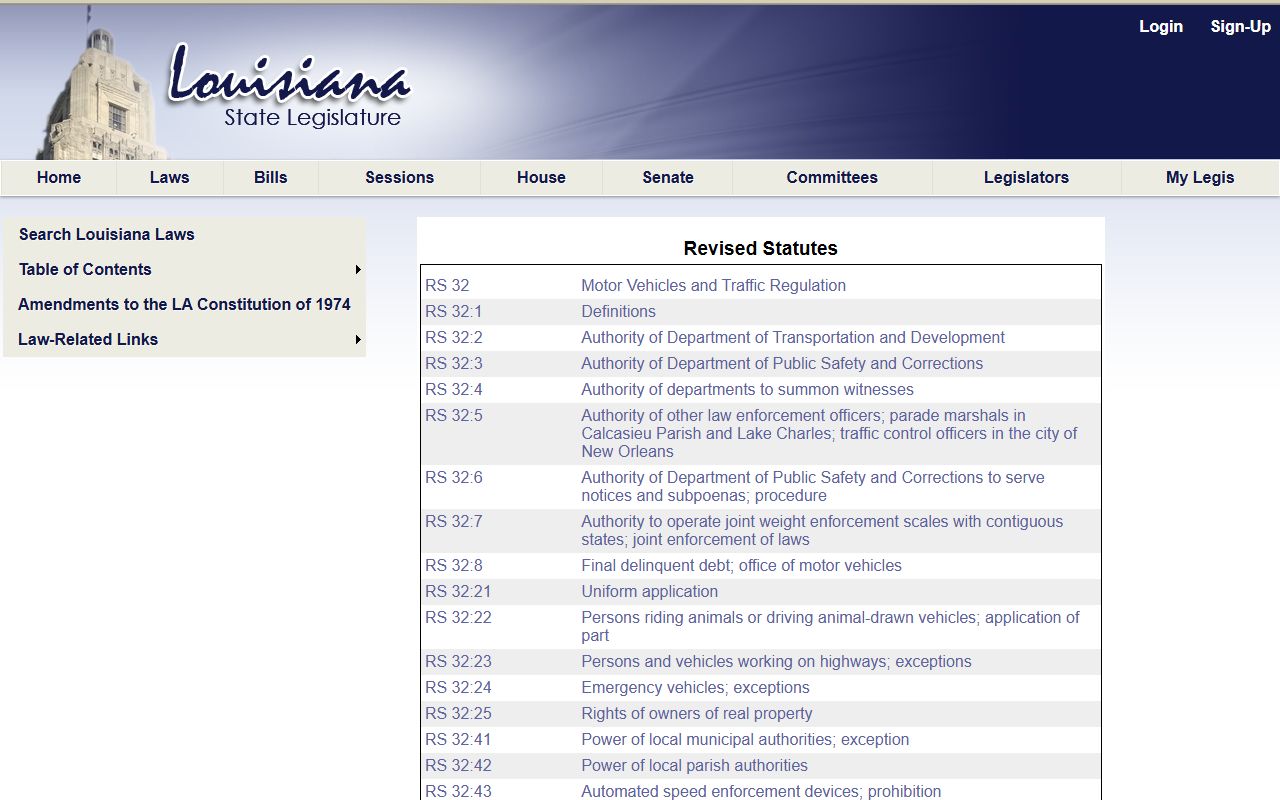
Louisiana's public-records framework lives in Title 44 of the Revised Statutes. The full set of provisions is indexed in the legislature's Title 44 table of contents, shown below. It defines what counts as a public record and who must produce it.
The starting definition of a public body and a public record is set by La. R.S. 44:1, shown here.
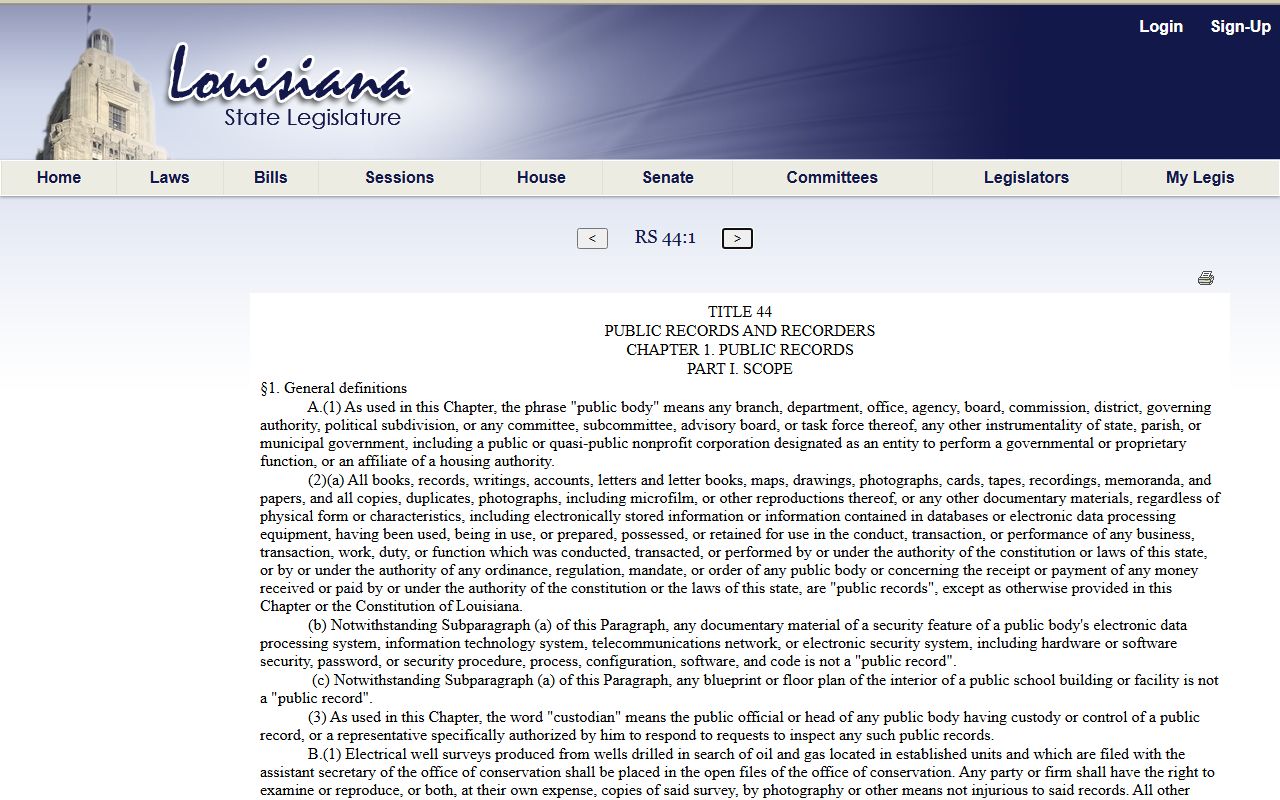
That definition controls whether a record held by a parish or city office falls under the law in the first place.
The Right to Inspect Orleans Parish Records
The core access right is in La. R.S. 44:31, which lets any adult inspect, copy, or reproduce public records unless an exemption applies. The statute is shown below.
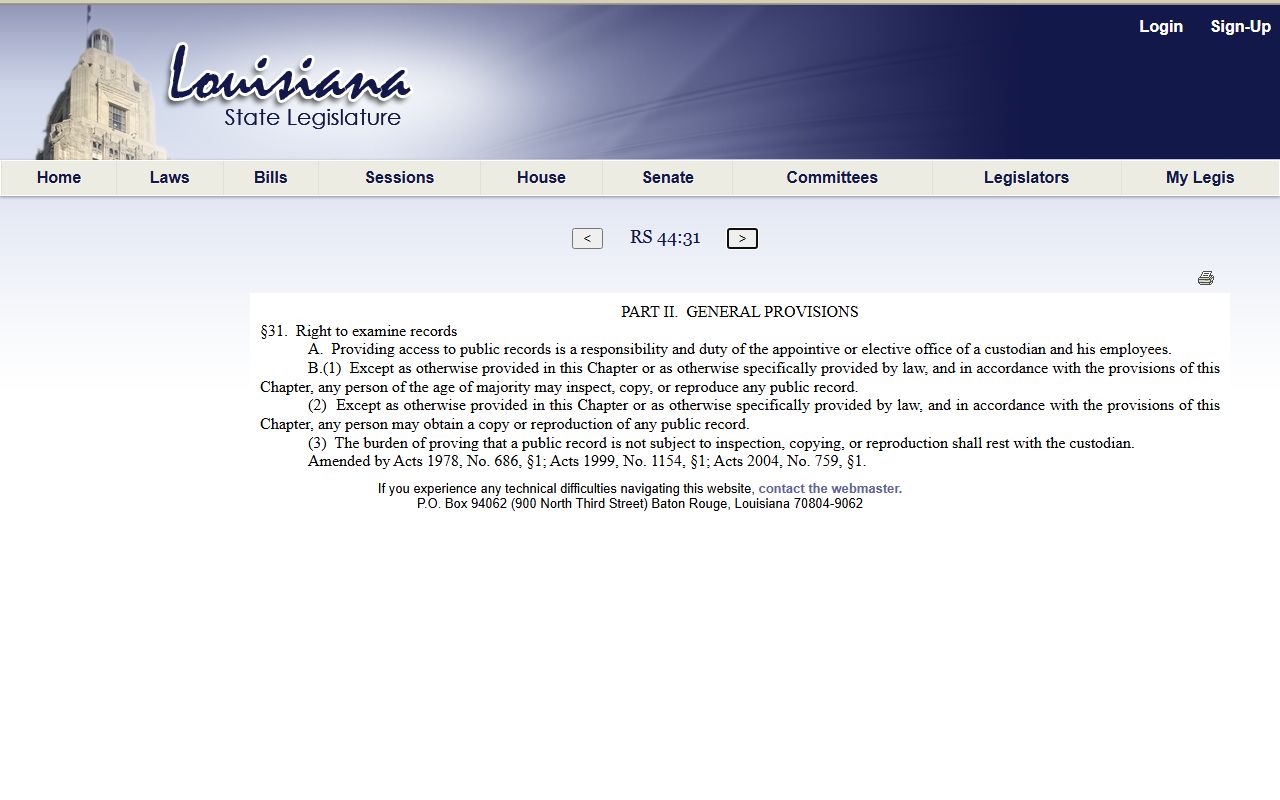
This is the provision an Orleans Parish requester relies on for non-exempt clerk, sheriff, and city records. The custodian's matching duties, including how to handle a request and what copy fees are lawful, are set by La. R.S. 44:32, shown here.
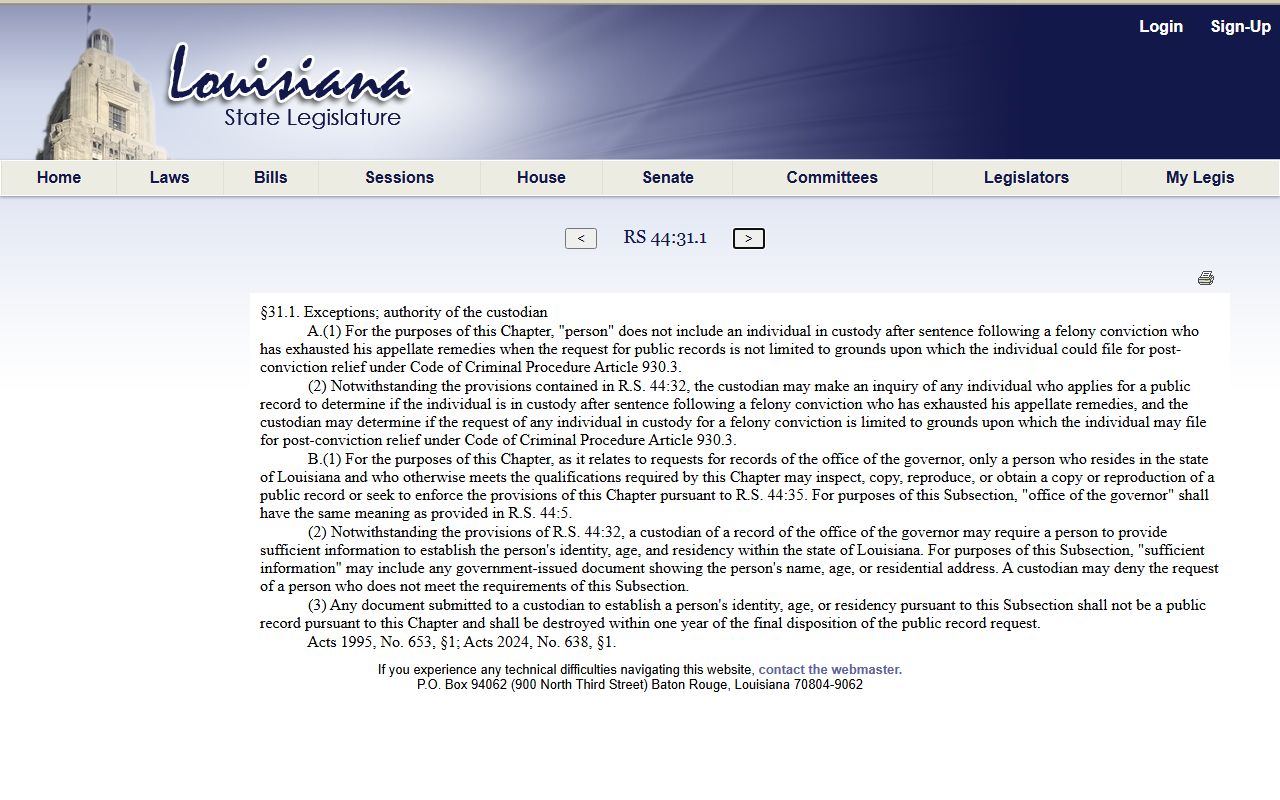
Together these two statutes give the public a right to records and give the custodian a duty to respond.
How to File a Public Records Request
A clear request gets a faster answer. Identify the right agency first, then describe the record with enough detail to find it. For civil clerk records, the office asks that requests go to its public-records email.
- Identify the agency that holds the record: the civil clerk, the criminal clerk, the sheriff, the police, or a city department.
- Describe the record clearly, with names, dates, case or instrument numbers, and document type.
- Send the request to the agency's listed contact, such as cdcclerk@orleanscivilclerk.com for civil clerk records.
- State the copy type you need: plain, certified, or electronic.
- Ask about the fee before the agency starts, so there are no surprises.
- Keep a copy of the request and any response.
Public Records Request Fields
Most parish requests are handled by email or a simple web form rather than a strict template. The elements below are what a custodian needs to act on a request.
| Request Element | Type | Required | Notes |
|---|---|---|---|
| Requester name | Text | Implied | Provided in the email or form. |
| Contact information | Text | Implied | Email, phone, or mailing address. |
| Record description | Text | Yes | Case number, names, dates, or book and page. |
| Copy type | Text | Optional | Plain, certified, or electronic copy. |
| Delivery method | Text | Optional | Mail, pickup, or electronic where permitted. |
Court Records vs Agency Records
Not every public record is a court record. Court files come from a clerk after a case is filed and are governed by both the public-records law and court rules. Agency records, like land documents, business filings, and police reports, come from the office that creates them. The civil clerk, as ex-officio recorder, also holds a deep set of land and notarial records beyond court cases.
This distinction tells you where to send a request. A lawsuit file goes to the clerk that holds the case. A police report goes to the police. A deed or mortgage goes to land records. Sending a request to the wrong office is the most common reason it stalls. For court files specifically, the Orleans Parish court records page covers the search systems.
Records the Civil Clerk Maintains
The Clerk of Civil District Court holds a broad set of public records beyond active court cases. As the ex-officio recorder, the office keeps land and property documents that many people need for title, lending, and family history work. These records are some of the most requested in the parish.
- Land conveyances - deeds and transfers of real property.
- Mortgages and liens - security interests recorded against property.
- Notarial acts - historic and current notarial records in the archives.
- Civil case files - lawsuits, divorces, and successions.
- Judgments - recorded court judgments affecting people or property.
Because the same office records both court filings and property documents, a single clerk handles requests that would be split across several offices in other places.
City and Police Records
The City of New Orleans handles administrative records through its public-records process, and that includes routing requests to departments. Police arrest and incident reports come from the New Orleans Police Department, subject to the law-enforcement exemption. Basic arrest and booking facts can be public even while an active investigation stays closed.
For records tied to an arrest, the arrest records page explains how the jail query and report requests fit together. City and police records follow their own intake steps, so check the department's current request page.
Fees and Certified Copies
Inspecting a public record is generally free, but copies and certifications carry fees. A custodian may charge lawful copy and reproduction costs, and certified copies cost more because certification is a clerk service. Confirm the amount before the work begins.
| Item | Source |
|---|---|
| Plain copies | Holding agency or clerk |
| Certified copies | Clerk of Civil District Court or criminal clerk |
| Land recording and copies | Land Records fee page |
The civil clerk's copy and request process is detailed on the Clerk of Civil District Court page.
Exemptions and Denials
Access is broad but not unlimited. Law-enforcement and investigative records are exempted by La. R.S. 44:3, shown below, which affects police reports, sheriff investigative files, and active criminal matters.
The full set of exceptions and cross-references is cataloged in La. R.S. 44:4.1, shown here.
When an agency denies a request, it should cite the specific exemption it relies on, so you know the legal basis.
Juvenile and Sealed Records
Some records are closed regardless of the general access rule. Juvenile court files are confidential under the Louisiana Children's Code. Expunged and sealed criminal records drop from ordinary public access. Adoption files and protected victim information are also withheld. A denial in these categories is the law working as written, not a custodian withholding without basis.
Note: A custodian who denies a request should identify the legal basis, especially for juvenile, sealed, expunged, or active investigative records.
Enforcement and Appeals
If a request is wrongly denied, Louisiana's public-records law allows the matter to be challenged in court. A custodian generally must produce a non-exempt record and may only withhold it under a specific exemption. Court records also answer to the Louisiana Supreme Court rules, which can govern sealed filings and access procedures beyond the statute. When access is in dispute, the legal basis matters more than the agency's preference.