
Criminal District Court Overview
Criminal District Court sits at 2700 Tulane Avenue and handles felony and major criminal cases for Orleans Parish. The court is the trial-level venue for serious charges. It is supported by the Criminal District Court Clerk, which keeps the case files and dockets. The Orleans Parish Sheriff runs the jail that holds people in custody for the court.
Routine traffic and city-ordinance matters do not come here; they go to the Municipal and Traffic Court. Civil disputes go to Civil District Court. Knowing the court boundaries saves time when starting a records search.
Judges and Divisions
Criminal District Court runs through several judicial divisions, with each judge handling a section of the docket. Cases are assigned to a section that stays with them through trial and sentencing. The court's judges page lists the divisions and is the official source for that information.
Because each judge sets the schedule for their section, court dates, motion deadlines, and trial settings vary across the court. A defendant or witness should confirm the section assigned to a case, since that is the courtroom for every appearance.
How a Criminal Case Moves
A felony case follows a recognizable path. Each step generates a record on the court docket, which the clerk maintains.
- Arrest by police or the sheriff, followed by booking and an initial appearance.
- The district attorney files a bill of information, or a grand jury returns an indictment.
- The defendant is arraigned and enters a plea.
- Pretrial motions, hearings, and bond reviews follow.
- The case ends in a plea, a dismissal, an acquittal, or a conviction at trial.
- If convicted, the defendant is sentenced, and any appeal opens a new docket at the Fourth Circuit.
For booking details and how arrests connect to court cases, see the arrest records page.
Specialty Courts in Criminal District Court
The court runs problem-solving programs that handle certain defendants outside the standard docket. A drug or treatment court combines judicial supervision with substance-use treatment, testing, and graduated sanctions. A behavioral-health docket serves defendants with verified mental-health needs, pairing treatment plans with regular court review.
Eligibility for any specialty program depends on the charge, criminal history, a clinical assessment, and approval from the court and the district attorney. These programs aim to address the issues behind the case rather than rely only on incarceration, though confidential clinical material does not become part of ordinary public records.
The District Attorney and Public Defender
The Orleans Parish District Attorney prosecutes criminal cases in this court. The office decides whether and how to charge, runs victim services, and operates diversion programs. The Orleans Public Defenders provide constitutionally required defense for people who cannot afford a lawyer. Both offices appear in every felony case, and together they shape how the court moves cases through the system.
Appeals to the Fourth Circuit
A defendant convicted in Criminal District Court may appeal. Orleans Parish appeals go to the Louisiana Fourth Circuit Court of Appeal, located in New Orleans, with further review possible in the Louisiana Supreme Court. The appellate court opens its own docket, separate from the trial record, with a new case number. Appeals are tracked apart from the original case.
Federal Criminal Court in New Orleans
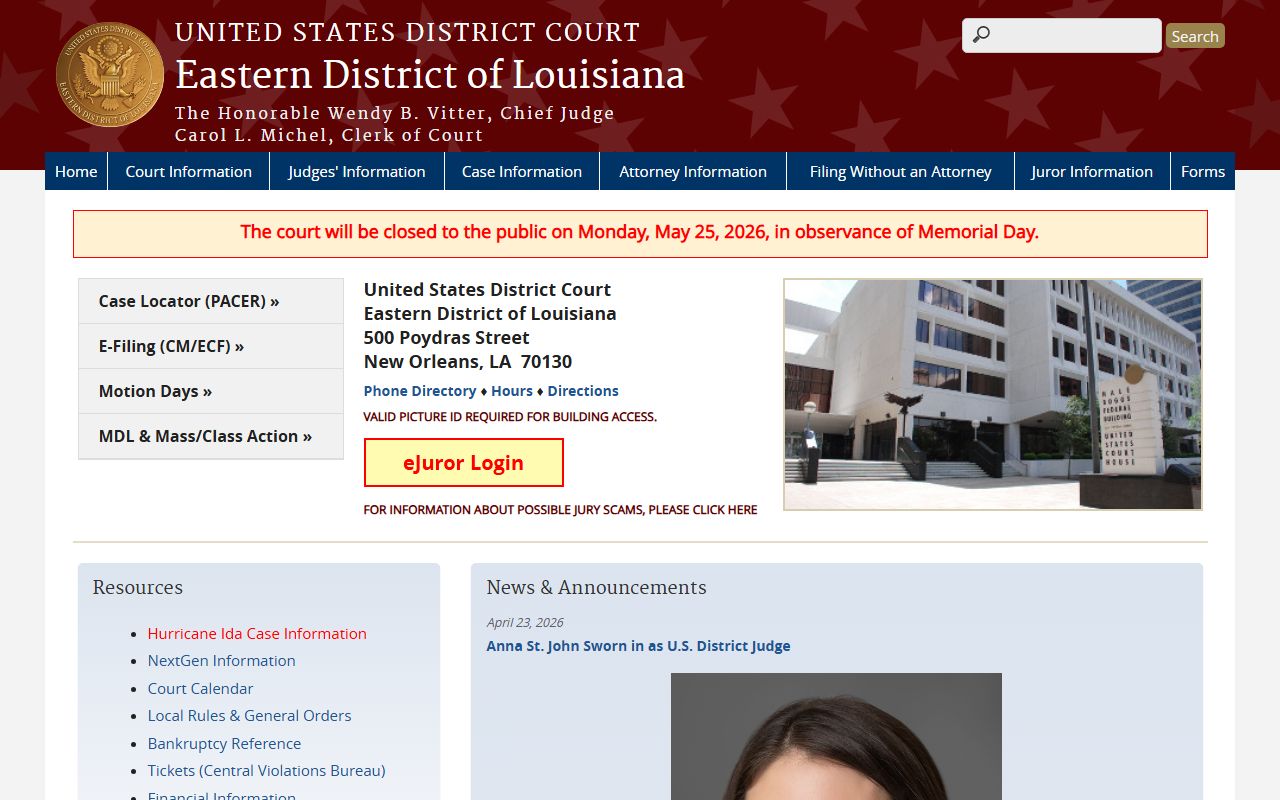
Federal criminal cases from New Orleans do not come to Criminal District Court. They go to the U.S. District Court for the Eastern District of Louisiana, which handles federal prosecutions, federal-question civil suits, maritime cases, and other federal matters. The court's official site is shown below.
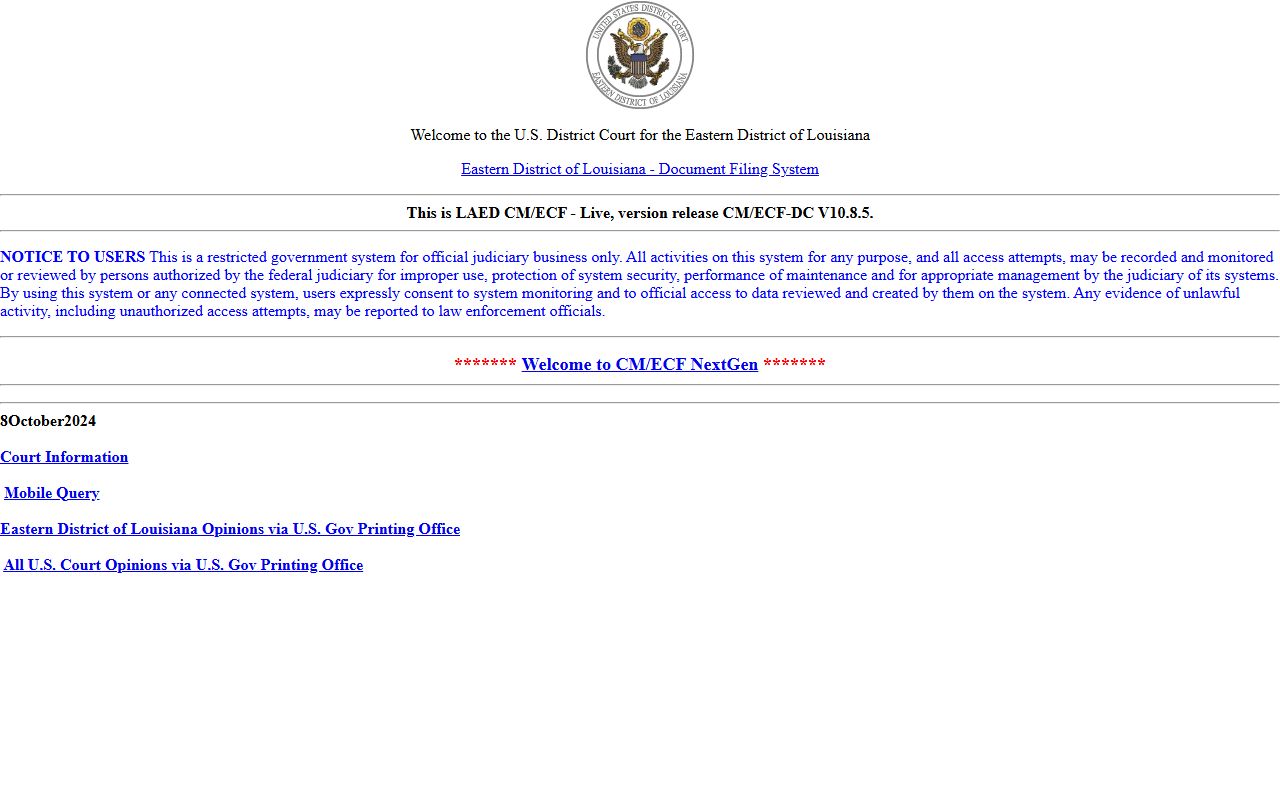
Federal cases are searched through CM/ECF, the electronic filing system used by registered users. Its login page is shown here.
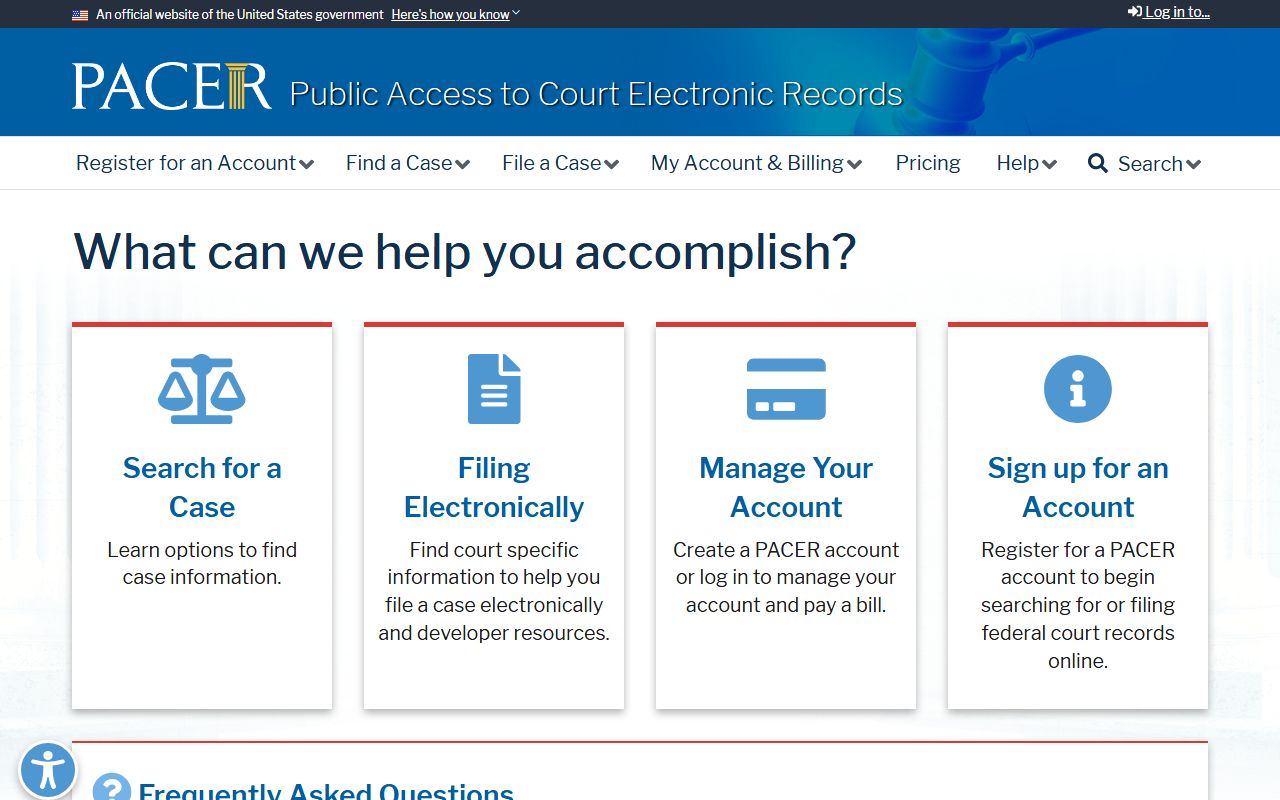
For broader public access, PACER is the federal docket service, which charges fees under the federal judiciary schedule.
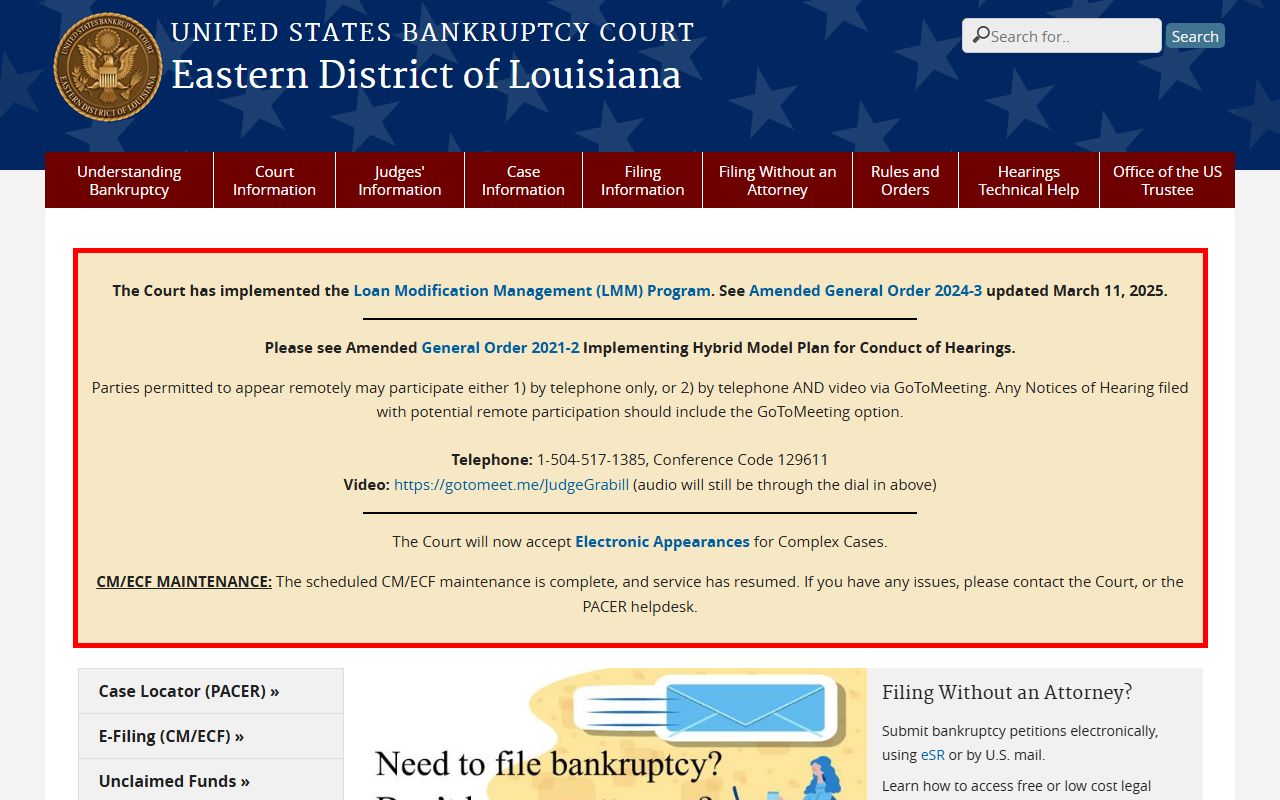
Federal bankruptcy cases use a separate court, the U.S. Bankruptcy Court for the Eastern District of Louisiana, shown below.
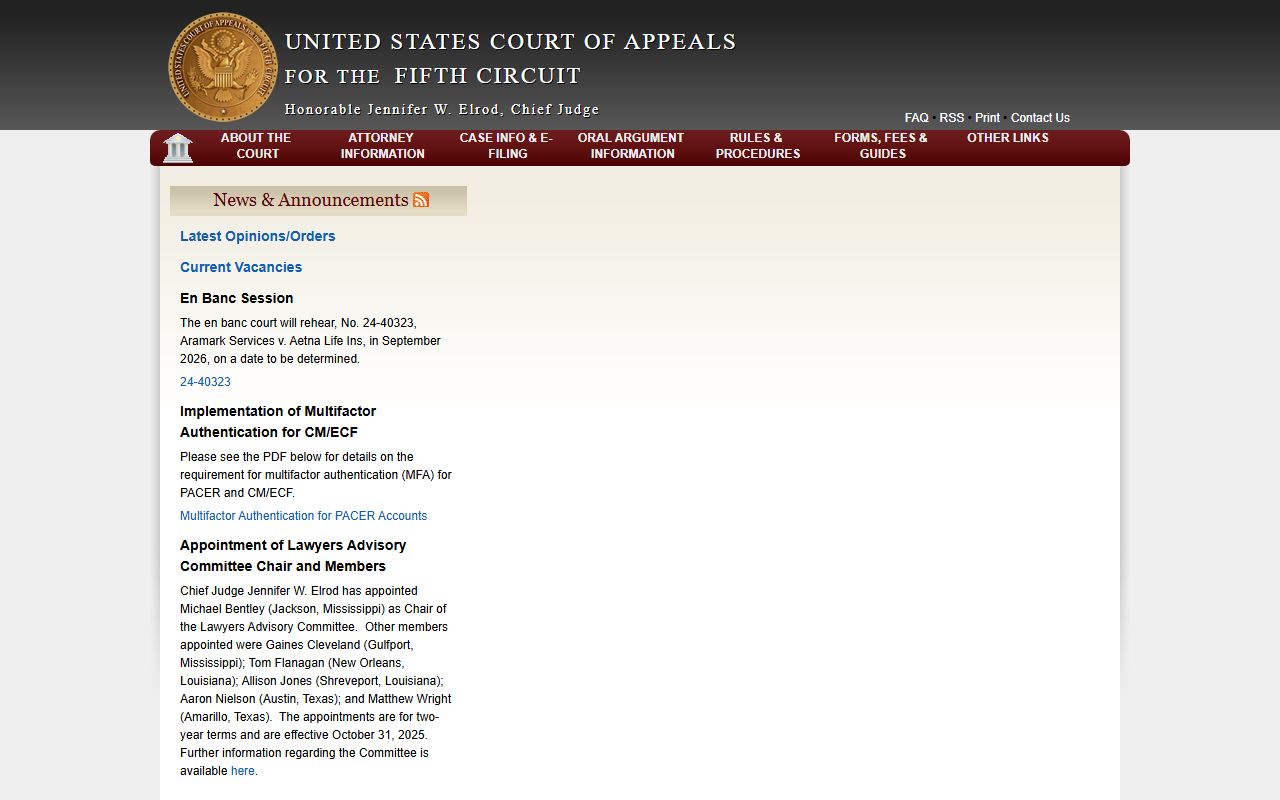
Federal appeals from the Eastern District go to the U.S. Court of Appeals for the Fifth Circuit, shown here.
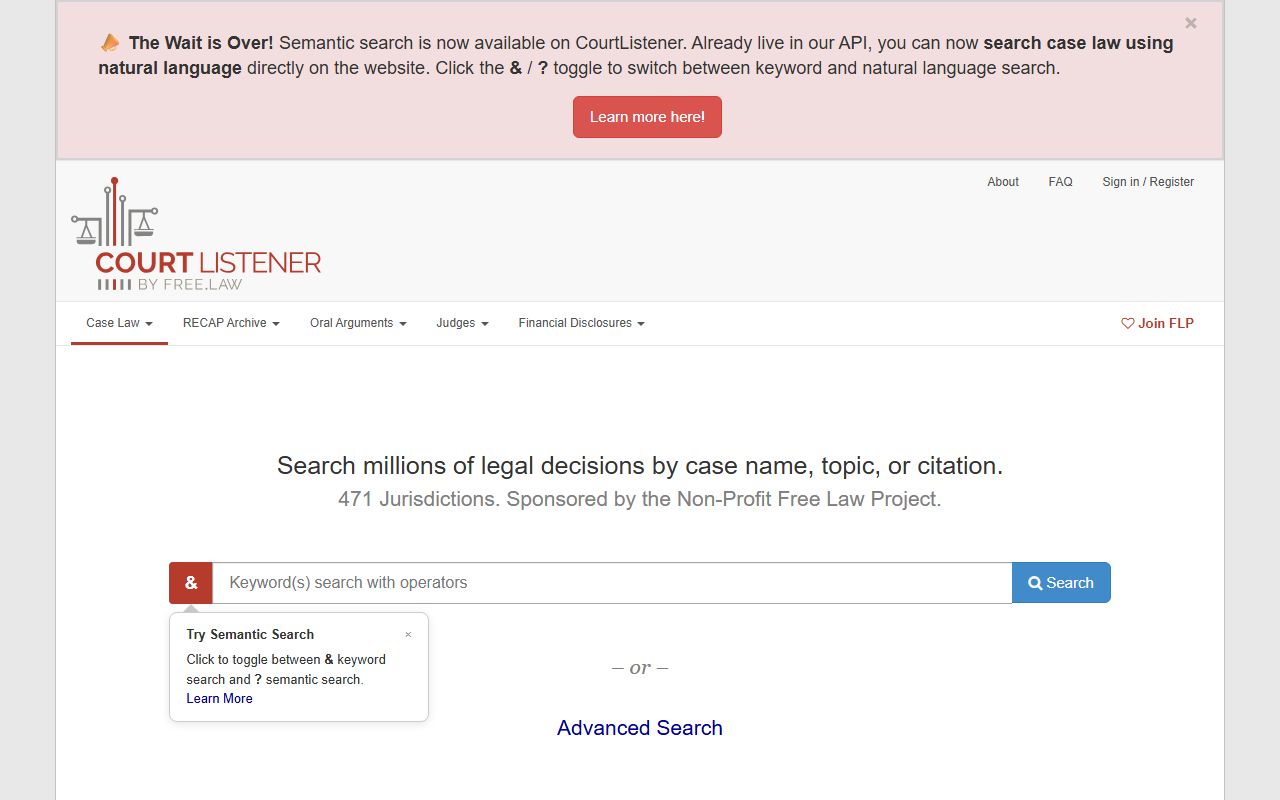
For free access to federal opinions and some docket data, CourtListener is a research alternative, though it is not the official federal docket of record. Its homepage is shown below.
None of these federal systems hold Criminal District Court records, and none of the parish systems hold federal cases. They run on parallel tracks.
Sealing and Expungement of Felony Records
Felony expungement petitions related to Orleans Parish prosecutions are typically filed in Criminal District Court. The Code of Criminal Procedure governs which records can be limited from public access and on what terms. The court reviews each petition for eligibility, waiting period, and statutory exclusions before deciding.
An expungement, when granted, does not destroy every copy of the record. Criminal justice agencies may retain limited non-public access for authorized purposes, while ordinary public databases drop the entry. The full rules sit on the court records page, with arrest-side coverage on the arrest records page.
Public Access to Criminal Court Records
Criminal court records are mostly public under Louisiana's Title 44 framework, with statutory exceptions for sealed, expunged, juvenile, grand jury, and active investigative material. A custodian that denies access in one of those categories should cite the specific exemption. The general access right is given by La. R.S. 44:31, with the catalog of exceptions in La. R.S. 44:4.1.
Court Location
Criminal District Court is in the New Orleans civic-center area, about a mile from the civil courthouse. Allow time for security screening, especially on mornings with full dockets when the building handles a high volume of cases.
Criminal District Court
2700 Tulane Avenue
New Orleans, LA 70119
Criminal District Court Clerk
Working with Criminal District Court Records
The court's own pages are the official source for divisions, rules, forms, and clerk contact. The case files themselves live with the Criminal District Court Clerk, not the court website. A user looking for a docket sheet, a minute entry, or a certified judgment should send the request to the clerk, while a user looking for a judge's chambers or a court rule should look on the court's site.
Note: A criminal case file from this court is not searched through the civil clerk's remote access system, even though both sit in Orleans Parish, because the two clerks keep separate records.